
Eksporter produkter til over tredive lande.
Sep 02,2026 / News
Stå foran et 7,5 fods træ oplyst med fire strenge, og det lyder som underklædt, uanset hvor mange ornamenter du hænger; giv den otte strenge, og folk spørger, hvor du har købt træet. Det fungerende svar: et 7,5-fods træ har brug for omkring 750 mini-pærer for et klassisk udseende, hvilket svarer til omkring 150 til 260 fod lys, når du bruger de standard 100-pærer, som de fleste butikker sælger. For en tæt, udstillingsglød skal du planlægge 1.050 til 1.500 pærer eller 220 til 500 fod tændt snor. Afsnittene nedenfor opdeler, hvor disse tal kommer fra, hvordan pæreafstanden og træets form ændrer dem, og hvordan man undgår de to fejl, der oftest ødelægger resultatet: undersving på hele foden af lys og blanding af hvide, der ikke matcher.
Industrien stenografi er enkel: budget 100 mini-pærer for hver lodret fod af træhøjde. Gang 7,5 med 100, og du får 750 pærer, det klassiske mål, der understøtter ornamenter uden at overdøve dem. Slip til 50 til 65 pærer pr. fod for en blød, hyggelig glød, og klatre op til 150 til 200 pr. fod, hvis du vil have, at træet selv skal være den lyseste ting i rummet.
En detalje, der er værd at kende, før du handler: De øverste 12 til 18 tommer af et 7,5 fods træ tilspidses ind i spidssektionen, så din løgmatematik effektivt dækker omkring 6,5 fod fuld forgrening. Det er netop derfor, at 750 løg er generøse frem for sparsomme, når grenene er fnugede og træet er pyntet.
Tabellen konverterer antallet af pærer til antallet af strenge og det samlede antal fødder af lys, ved at bruge de 100-pærer, de fleste husstande køber.
| Dækningsniveau | Minipærer (i alt) | 100-pære strenge | Oplyst snorlængde |
|---|---|---|---|
| Blød glød | 500 | 5 | 105-165 fod |
| Klassisk | 750 | 7-8 | 150-260 fod |
| Lyst og tæt | 1.050-1.125 | 10-11 | 210-370 fod |
| Udstillingsstykke | 1.500 | 15 | 310-500 fod |
Antallet af pærer og lysets fod er forbundet med én variabel: afstanden mellem pærerne på ledningen. Hver standard 100-pære streng sætter 100 pærer langs sin oplyste længde, men den længde ændrer sig meget med afstanden.
For et indendørs træ er en snæver afstand på 2,5 til 4 tommer det, der skaber den uafbrudte glorie, som folk forbinder med et godt oplyst træ. Bred afstand på 6 til 8 tommer fortjener sin plads udendørs, hvor besætninger vikler trunks og store lemmer og ønsker tydelige lyspunkter, der er synlige på afstand.
Skift til større C7- eller C9-pærer ændrer regnestykket igen: halver antallet til omkring 375 til 400 pærer for et 7,5-fods træ. Disse strenge løber normalt 25 til 50 fod med 6 til 12 tommers afstand, og de større linser kaster lyset længere, så færre pærer stadig læse lys.
En købsregel forhindrer de fleste hovedpine: Brug en enkelt model fra et enkelt produktionsparti for hele træet. En halv tomme forskel i afstanden er synlig på tværs af rummet, og LED-farvetemperaturen kan skifte mærkbart mellem produktionskørsler.
En blyant eller et træ med en slank profil på 7,5 fod bærer mindre grenoverflade, så 20 til 30 procent færre pærer ser stadig fulde ud: 550 til 600 pærer eller omkring 115 til 200 fod tændt snor. En bred, fuld profil beder om 25 til 50 procent mere, og lander på 950 til 1.125 pærer for det klassiske niveau. Løvtæthed betyder lige så meget som bredde, fordi tætte grene giver dig overflader, du kan stikke tråden ind i og skjule snoren mellem gennemløbene, mens sparsomt løv blotlægger trådløb og gør huller tydelige. For købere, der planlægger at lyse kraftigt, frodige løvtræer med høj tæthed er bygget til netop dette job.
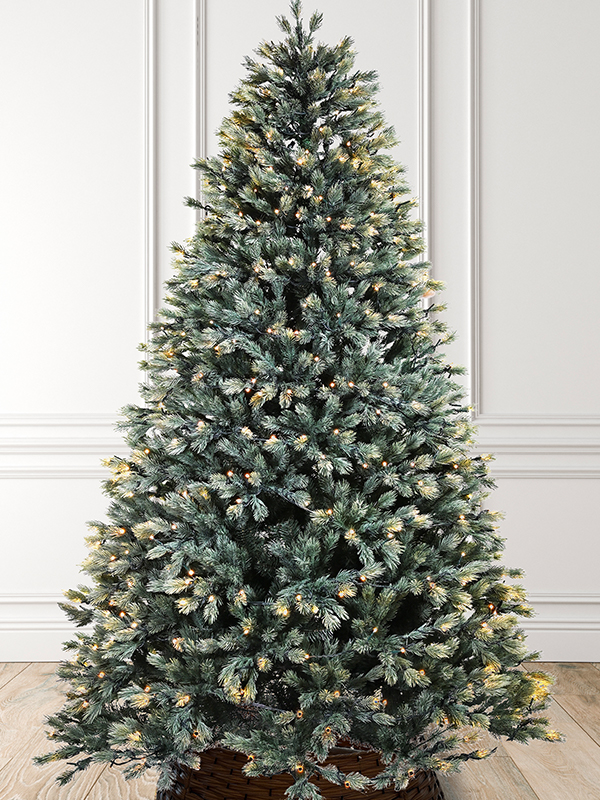 Pre-Lit tæt PE Gran kunstigt juletræ med varmhvide lysdioder Med tæt PE-løv designet til kraftig belysning giver denne 7,5-fods foroplyste gran masser af grenoverflade at stikke ledning ind i, hvilket gør det nemt at nå et fuldt udseende på 750 pærer. Se produkt →
 Forbelyste træer ankommer med belysning installeret, og det trykte antal fortæller dig, hvor meget efterfyldning, hvis nogen, træet har brug for. På en 7,5-fods model kører integrerede tæller almindeligvis 400 til 700 lys i mellemklassen og 800 til 1.000 eller mere på premium tætte byggerier. Hvis dit nuværende træ sidder i den lave ende, eller hele sektioner har fejlet efter et par sæsoner, koster det langt mindre at tilføje to til fire strenge end at udskifte træet: Behandl det indbyggede sæt som basislaget og bring det samlede antal op til målet på 750 pærer.
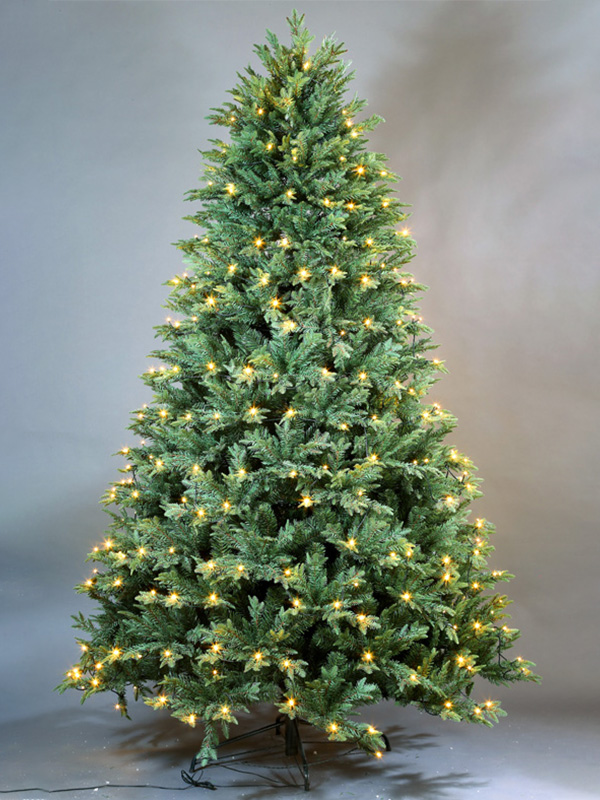 7 fod PE PVC blandet forbelyst juletræ Et forbelyst træ med blandet nåle i en populær 7-fods størrelse. Dens installerede lysantal viser, om den opfylder målet på 750 pærer eller blot har brug for et par ekstra strenge for at fylde op. Se produkt →
 De samme 750 pærer kan se tynde eller luksuriøse ud, alt efter hvordan du fordeler dem. Professionelle vikler snarere end spiral, og rækkefølgen betyder lige så meget som optællingen.
Hvis du ønsker den fulde version af disse mønstre, vores guide på hvordan du tænder op i dit juletræ dækker lodret indpakning, trunk-first layering, og hvordan man korrigerer ujævne zoner uden at starte forfra. Og budgetter med én reservestreng ud over dit samlede antal: den dækker den mørke lomme, du uundgåeligt vil finde, og den giver dig en matchende erstatning næste sæson, da uoverensstemmende strenge er den mest almindelige årsag til, at et træ ser pletvis ud i år tre.
Farvetemperatur er den stille detalje, der adskiller en sammenhængende skærm fra en rodet. Varm hvide lysdioder sælges almindeligvis til 2700K og 3000K, og forskellen er tydelig, når sætene sidder side om side: den ene læser cremet, den anden lidt blå. Flerfarvede sæt varierer endnu mere mellem mærker. Hvis du kører oplyst guirlande hen over kaminhylden eller ned ad en trappe inden for synsvidde af træet, skal du matche dens temperatur til træet, ellers vil det element, der er lysest, se forkert ud, selvom hvert produkt er fint for sig selv. Dette er grunden til, at vi bygger foroplyste træer og oplyste guirlander på en fælles varm-hvid-specifikation, så et færdigt rum læses som én designet scene i stedet for en samling af separate indkøb.
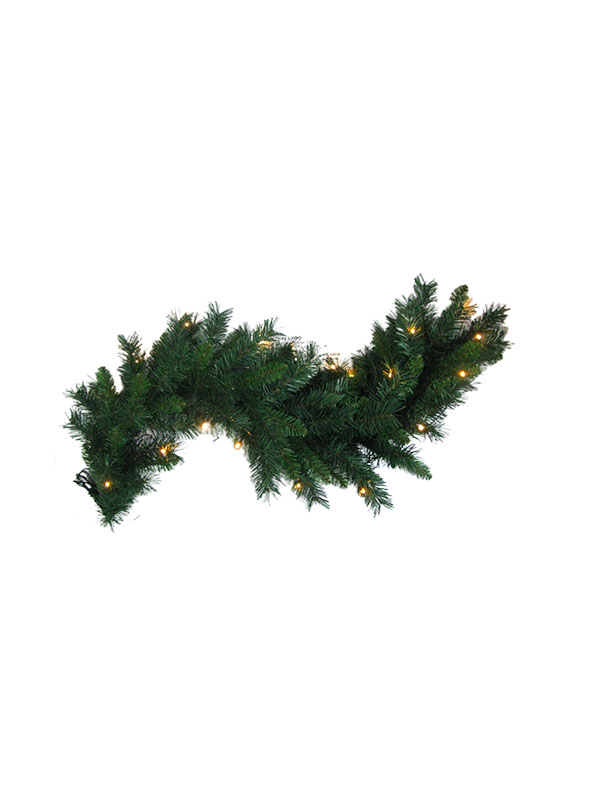 Forbelyst oplyst julekrans Denne guirlande er bygget til den samme varme-hvide specifikation som de matchende forbelyste træer, og holder kamin- og trappebelysningen konsistent i farvetemperaturen med træet. Se produkt →
 Watt bestemmer, hvor mange strenge der kan forbindes ende til ende. Et minisæt med 100 glødelamper trækker omkring 40 watt, og de fleste producenter har en ende-til-ende-hætte på tre til fem sæt; overskridelse af grænsen overophedes stik og sprænger sikringen indbygget i hanenden. LED-sæt trækker omkring 4 til 6 watt pr. 100 pærer og tolererer normalt længere løb, men det trykte mærke styrer begge veje. For et klassisk træ med 750 pærer, der fungerer ud til syv eller otte LED-strenge på en enkelt kørsel for de fleste moderne sæt, eller to separate løb af tre til fire glødelamper, ideelt fordelt på forskellige stikkontakter.
Hvis du køber til en lobby, butiksgulv eller begivenhedsprogram, standardiser specifikationen i stedet for at improvisere træ for træ. Fastgør et løg-per-fod-nummer for hver træhøjde, bestil hver streng fra én produktionsbatch, og spørg leverandørerne om CE-, RoHS- og GS-dokumentation på foroplyste træer og oplyste guirlander. At udskifte en defekt streng derhjemme er en plage; at erstatte uoverensstemmende belysning på tværs af fyrre udstillingstræer er en budgetpost.
Den nederste linje: 750 minipærer, svarende til omkring 150 til 260 fod lys, er det pålidelige mål for et 7,5-fods træ, med 1.050 til 1.500 pærer reserveret til udstillingsgenstande. Vælg pæreafstand, før du tæller strenge, pak først bagagerummet ind, køb et ekstra sæt fra samme batch, og hold hvert oplyste stykke i rummet til én farvetemperatur. Gør disse fire ting, og selv et beskedent budget producerer et træ, der ser professionelt oplyst ud.
Vi etablerer fra 2003, har 20 års erfaring.

NO.16, Xiaren Industrial District, Jinting Town, Shengzhou, Shaoxing City, Zhejiang-provinsen, Kina.

+86-0575-83160278
Shaoxing Hongxin Gift Co., Ltd. ALLE RETTIGHEDER FORBEHOLDES.